
FSD Africa’s Nature team has worked in nature-related finance for close to 4 years now, and one thing is clear: nature loss is no longer just an environmental issue. For most African financial institutions and businesses, it is increasingly becoming a decision-making issue, with implications for risk, resilience and long-term value. As biodiversity declines, water stress intensifies and ecosystems degrade, the effects can be felt across supply chains, asset performance and disclosure obligations. Yet many institutions still lack the local, decision-useful data needed to respond effectively.
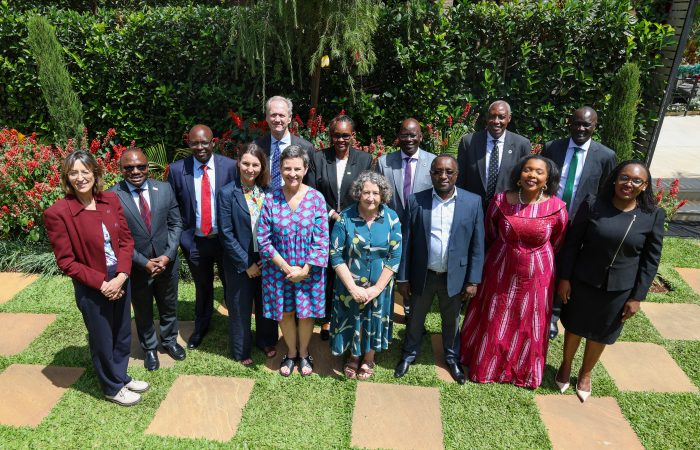
Recognising this gap, the Taskforce on Nature-related Financial Disclosures (TNFD) proposed the Nature Data Public Facility, or NDPF, an open-access platform intended to connect, standardise and improve access to nature-related data. The facility was piloted through a sandbox prototype in four regions, Australia, Brazil, Japan and South Africa, with insights feeding into the global process ahead of COP30. FSD Africa led the South Africa pilot from March to August 2025, helping ensure that this emerging data ecosystem is shaped with African realities in mind. Bringing together both upstream data providers and downstream users, the pilot explored how nature data could become more accessible and useful in real-world decision-making.
These regional insights went on to inform TNFD’s recommendations at COP30, where eight priority actions were identified to strengthen nature data for market participants. These include improving the accessibility and interoperability of datasets, clarifying licensing and governance frameworks, investing in local data infrastructure and capacity, and fostering stronger collaboration between data providers and users. Crucially, the recommendations emphasise the need to scale practical solutions, such as the NDPF, while building a more coordinated global ecosystem that reflects regional realities. This signals a shift from piloting towards implementation, with a clear role for initiatives like the South Africa sandbox in shaping what comes next.
A stronger foundation than many assume
One of the clearest messages from the South Africa pilot is that Africa is not starting from zero. The pilot involved biodiversity data custodians including the Endangered Wildlife Trust (EWT) and the South African National Biodiversity Institute (SANBI), alongside datasets from the Department of Forestry, Fisheries (DFFE), submitted through SANBI. Together, they contributed 18 regional datasets to the sandbox. Many were already geospatially ready, giving them immediate value for mapping and modelling, which are essential for location-based risk assessment and planning.
That matters because global datasets, while useful for broad coverage, often do not provide the regional granularity needed for African decision-making. The pilot reinforced the importance of local, verified data that reflects real ecosystems, real land use and real economic exposure. In that sense, South Africa showed genuine readiness, not only in data availability, but in the technical quality of what already exists.
But the pilot also highlighted some challenges. Access barriers remain high: some datasets require permissions, sit behind restrictive licences or come with costs that limit wider use. Update schedules are not always clear, which makes it harder for institutions to rely on data for time-sensitive analysis. These are not marginal issues, they shape whether nature data can move from specialist use into mainstream financial and business decision-making.
From disclosure to better decisions
The downstream users in the pilot, including participants from financial services and mining, made it clear that nature data is already becoming relevant to their core business decisions. They pointed to its growing role in risk management, reporting, biodiversity baselines and the development of new products such as water bonds and nature-based solutions. This shows that the focus is starting to move beyond awareness towards practical application.
At the same time, the pilot revealed familiar obstacles. Data remains fragmented. Local specificity is often missing from global sources. Many institutions still depend heavily on external consultants because in-house capacity remains limited. If nature data is to be used at scale across African markets, that must change. Capacity building, stronger collaboration and more flexible licensing models will all be critical.
This is where FSD Africa can make a distinctive contribution. By convening providers and users, championing African priorities in the global NDPF process, and supporting practical uptake across the continent, we can help strengthen Africa’s nature data ecosystem. The opportunity is not just about improving reporting, it is about making nature data more accessible, actionable and relevant to better finance and business decisions.
The South Africa pilot demonstrates both the huge potential in the continent’s nature data ecosystem and the work still needed to help institutions advance their nature and sustainability agendas. With further work to lower the barriers to access, connect the data more effectively, and build the capacity needed, Africa could be approaching a turning point, where nature data informs the financial and business decisions that will shape resilience and the future of its natural capital. This is a conversation FSD Africa is continuing to drive through its Nature team, which hosts the African Natural Capital Alliance, as the focus shifts from piloting what is possible to building a nature data ecosystem that works in practice.